 Explore Franchising Opportunities


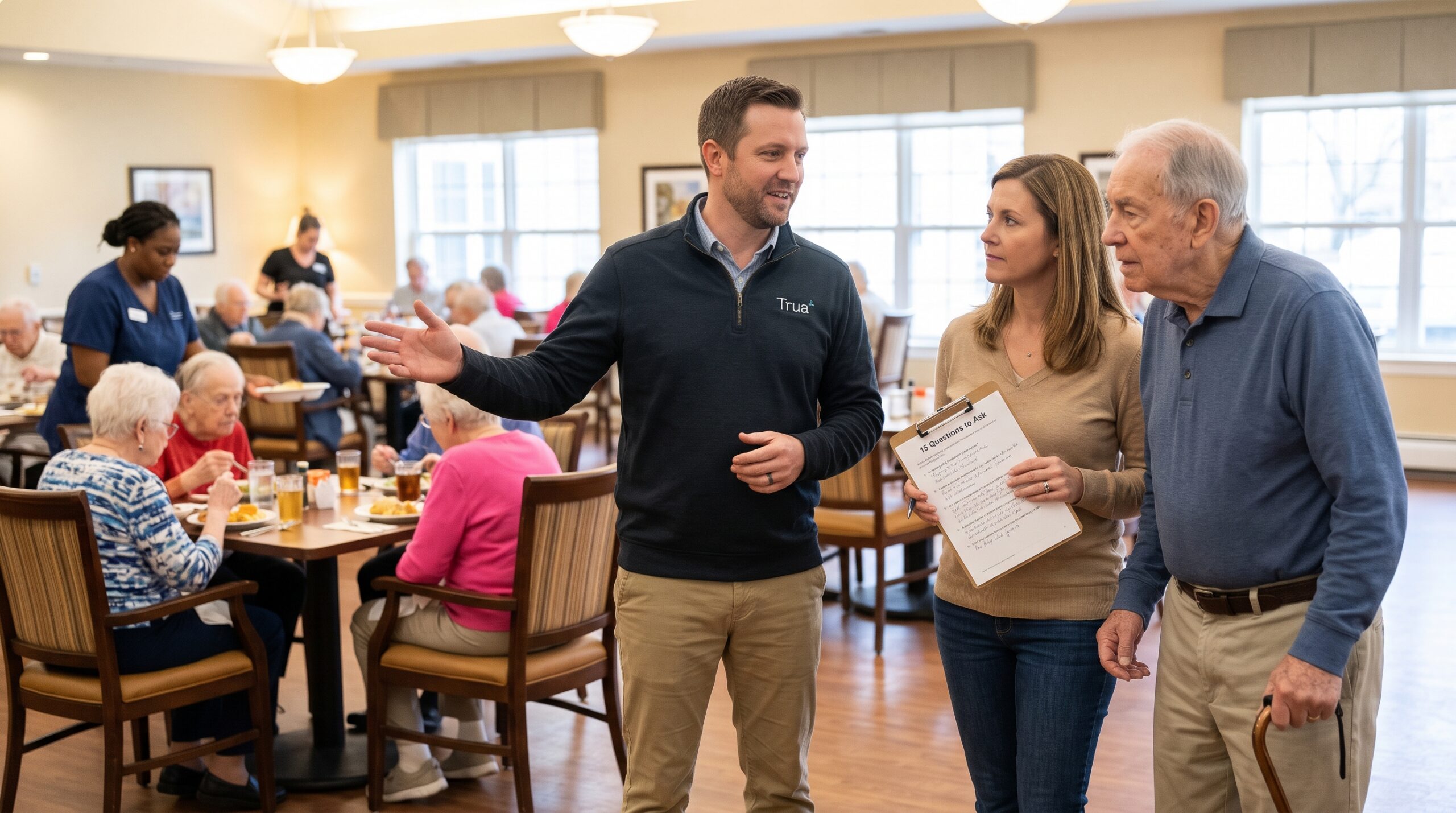
When you tour an assisted living community, sales directors work hard to make a pristine first impression. You are shown spotless model apartments, scenic courtyards, and restaurant-style dining areas.
However, a visually appealing lobby tells you very little about what happens at 2:00 AM on a Sunday when a resident presses a call pendant, or how that facility handles unexpected price hikes when personal care requirements increase.
Choosing an assisted living community is both a major financial commitment and a deeply personal medical decision. To look past marketing presentations and evaluate how a facility actually operates, you need targeted, probing inquiries.
Drawing from over two decades of clinical experience in senior rehabilitation and residential facilities, here are 15 non-negotiable questions to ask before choosing an assisted living community, organized by the areas that impact your parent’s safety, dignity, and monthly budget.
Staffing & Clinical Care Questions
Frontline caregivers, medication technicians, and nurses dictate your parent’s daily quality of life far more than any physical amenity.
1. “What is your exact caregiver-to-resident ratio across each shift—day, evening, and overnight?”
- Why it matters: Communities often quote a broad overall ratio (e.g., “1 to 8”) that blends administrative and kitchen staff into the count. You need to know the ratio of dedicated direct-care aides actively on the floor during the daytime, during dinner, and especially throughout the overnight shift.
- Red flag: Vague answers like “we staff to resident acuity” without providing concrete numbers, or having fewer than two active caregivers covering an entire residential wing overnight.
2. “Is a licensed nurse (RN or LPN) physically in the building 24/7, or are they merely on-call?”
- Why it matters: In many states, assisted living regulations only mandate an on-call nurse after business hours. If an acute change of condition, skin tear, or adverse medication reaction occurs at midnight, an on-site nurse can assess the issue immediately and often prevent an unnecessary, traumatic trip to the emergency room.
- Red flag: Facilities where med-techs dispense complex pharmaceuticals without direct, physical nursing oversight on weekends and nights.
3. “What is the average tenure and annual turnover rate of your direct care team and executive leadership?”
- Why it matters: Senior care experiences significant industry turnover. High staff churn disrupts continuity of care; new aides may not know your parent’s baseline, fall risks, or behavioral preferences. When executive directors and directors of nursing stay in their roles for several years, frontline caregiver retention is almost always higher.
- Red flag: Communities that have cycled through three different executive directors in two years or rely predominantly on rotating temporary agency staff.
4. “How are caregivers trained to de-escalate anxiety, agitation, and early cognitive changes?”
- Why it matters: Even in traditional assisted living (outside of dedicated memory care), mild cognitive decline, sundowning, and confusion are common. Caregivers must be certified in dementia communication techniques, such as validation therapy and gentle redirection.
- Red flag: Training that consists solely of passive video modules completed during a one-day onboarding orientation without ongoing hands-on mentorship.
Medical Operations & Health Safety
Assisted living bridges the gap between home and clinical care. Knowing where those boundaries lie prevents sudden eviction notices.
5. “What specific health conditions or care needs would force my parent to move out?”
- Why it matters: Every community maintains strict licensure discharge criteria. Some cannot accommodate two-person mechanical transfers (Hoyer lifts), sliding-scale insulin injections, indwelling catheters, or wandering behaviors. Asking this upfront prevents your parent from having to relocate just six months after moving in.
- Red flag: Assurances that a resident can “age in place forever” without putting in writing their specific medical exclusion boundaries.
6. “What is your average call-light response time, and how is it monitored?”
- Why it matters: When a senior presses an emergency pendant to use the restroom, waiting 20 to 30 minutes frequently leads to unassisted transfer attempts and catastrophic falls.
- Red flag: Communities that do not track electronic response-time metrics or dismiss response delays as occasional glitches.
7. “How are medications stored, verified, and administered, and what happens if a dose is missed?”
- Why it matters: Medication errors represent one of the primary drivers of hospitalization among seniors. Ask whether the community uses electronic Medication Administration Records (eMAR) with barcode scanning, who administers the pills, and how family members are notified of prescription changes or refusals.
- Red flag: Paper-only medication logs or facilities allowing unlicensed and uncertified staff to manage prescription distribution.
Financial Policies & Contract Transparency
Pricing models in senior living can be notoriously opaque. Clarifying billing terms before signing a residency agreement prevents budget-breaking surprises.
| Assisted Living Billing Models | |
|---|---|
| All-Inclusive Pricing |
|
| Tiered / A La Carte (Acuity-Based) |
|
8. “Can you walk me through your complete fee structure: base rent, care points, and community fees?”
- Why it matters: Many communities market a modest monthly rent, only for families to discover that medication management, escorting to meals, and extra showers add $1,500 to $3,000 in tiered “level-of-care” surcharges.
- Red flag: Refusing to supply an itemized price sheet detailing the exact cost of each care tier or activity of daily living (ADL) point.
9. “How often are functional care assessments conducted, and how do they impact the bill?”
- Why it matters: Reputable communities reassess residents upon move-in, at 30 days, every six months, and following any hospital stay. You must know who conducts the assessment (ideally a licensed nurse) and whether family members have the right to review the findings before fees increase.
- Red flag: Sudden rate hikes added to the monthly invoice without prior consultation or formal re-evaluation meetings with the family.
10. “What has been your historical percentage rate increase over the last three years?”
- Why it matters: Most senior living communities adjust base rates annually to account for inflation, food expenses, and labor costs. Knowing their historical adjustments (typically 3% to 8% annually) allows you to model your long-term budget accurately.
- Red flag: Annual spikes exceeding 10% to 15% without substantial facility upgrades or verifiable regulatory justifications.
11. “What happens if our family runs out of private funds?”
- Why it matters: Some communities accept Medicaid waivers (such as HCBS) after a resident has privately paid for a mandatory period (e.g., two years), while other communities are 100% private-pay and will issue a 30-day discharge notice when private funds are depleted.
- Red flag: Evasive answers regarding financial transitions or failure to explain their Medicaid transition policies clearly.
Daily Life, Nutrition & Community Culture
Physical safety keeps a senior alive, but social connection and dignity make life worth living.
12. “Can we sample a standard weekday meal in the dining hall during regular resident hours?”
- Why it matters: Nutrition and dining are central to daily satisfaction. Eating in the dining room lets you evaluate food temperature, flavor, menu choices, and how staff assist residents who struggle with utensils or posture.
- Red flag: Refusing to allow you to eat lunch or dinner during a tour, or serving food that is visibly processed, bland, or lukewarm.
13. “What activities actually ran yesterday, and how many residents actively participated?”
- Why it matters: A paper activities calendar can look dynamic with yoga, lecture series, and card clubs. The true test is participation: Did residents actually attend, or were these events canceled due to staffing shortages?
- Red flag: Finding dozens of residents seated silently in common areas in front of blaring televisions with no staff engagement.
14. “What scheduled transportation is provided for outside medical appointments and personal errands?”
- Why it matters: If your parent must surrender their car keys, the community’s transportation schedule becomes their lifeline. Ask what radius the shuttle covers, which days trips run, whether drivers escort residents inside medical offices, and if individual trips incur additional per-mile fees.
- Red flag: Transportation limited to a single day per week within a narrow 3-mile radius.
15. “How do you communicate health updates, falls, or behavioral changes to families?”
- Why it matters: You should not have to chase down care staff to find out that your mother fell, started a new antibiotic, or refused dinner three nights in a row. Ask about their communication protocols, whether they use a dedicated family portal, and who your direct point of contact will be.
- Red flag: No clear emergency notification tree or families reporting that they only discover health incidents days after they occur.
Quick Reference: Tour Evaluation Matrix
Use this evaluation matrix to score communities during your visits:
| Category | Green Flags (Signs of Quality) | Red Flags (Exercise Caution) |
|---|---|---|
| Staffing | Consistent direct-care ratios; on-site nurses; multi-year leadership tenure | High turnover; heavy agency reliance; “on-call only” nursing |
| Safety & Medical | Monitored eMAR systems; under 5-minute call-light responses | Paper-only tracking; unmonitored emergency pendants |
| Pricing | Transparent, written ADL tier sheets; clear notice before rate hikes | Vague point systems; surprise charges on monthly statements |
| Dining | Freshly prepared meals; accommodates special diets; lively dining rooms | Cold or overly processed food; rigid, single-option menus |
| Culture | Residents actively engaged in hobbies; warm interactions by name | Residents parked unengaged in hallways; persistent odors |
How Trua Protects Families During Community Tours (100% Free)
Touring assisted living facilities on your own can quickly trigger decision fatigue. Sales directors are trained to emphasize interior design while sidestepping questions about state compliance citations, night shifts, and care surcharges.
Trua: The Senior Living Locators approaches this decision through a clinical lens rather than a sales quota:
- Geriatric Clinical Leadership: Founded by Dr. Matt Staley, a Doctor of Physical Therapy and Geriatric Certified Specialist with more than 20 years of hands-on experience inside senior care and rehabilitation facilities.
- Objective Physical & Functional Assessments: We begin with a comprehensive senior care assessment to document your parent’s mobility baseline, transfer requirements, and budget parameters before you tour.
- Curated, Pre-Screened Matches: We eliminate generic internet directories and narrow your search to 2 or 3 communities with strong state survey records, stable staffing, and appropriate care capabilities.
- In-Person Tour Accompaniment: We physically join you on community tours to ask the tough operational and clinical questions that sales staff rarely volunteer.
- 100% Free of Charge: Our consultations, care assessments, and placement guidance are completely free to seniors and their families.