 Explore Franchising Opportunities


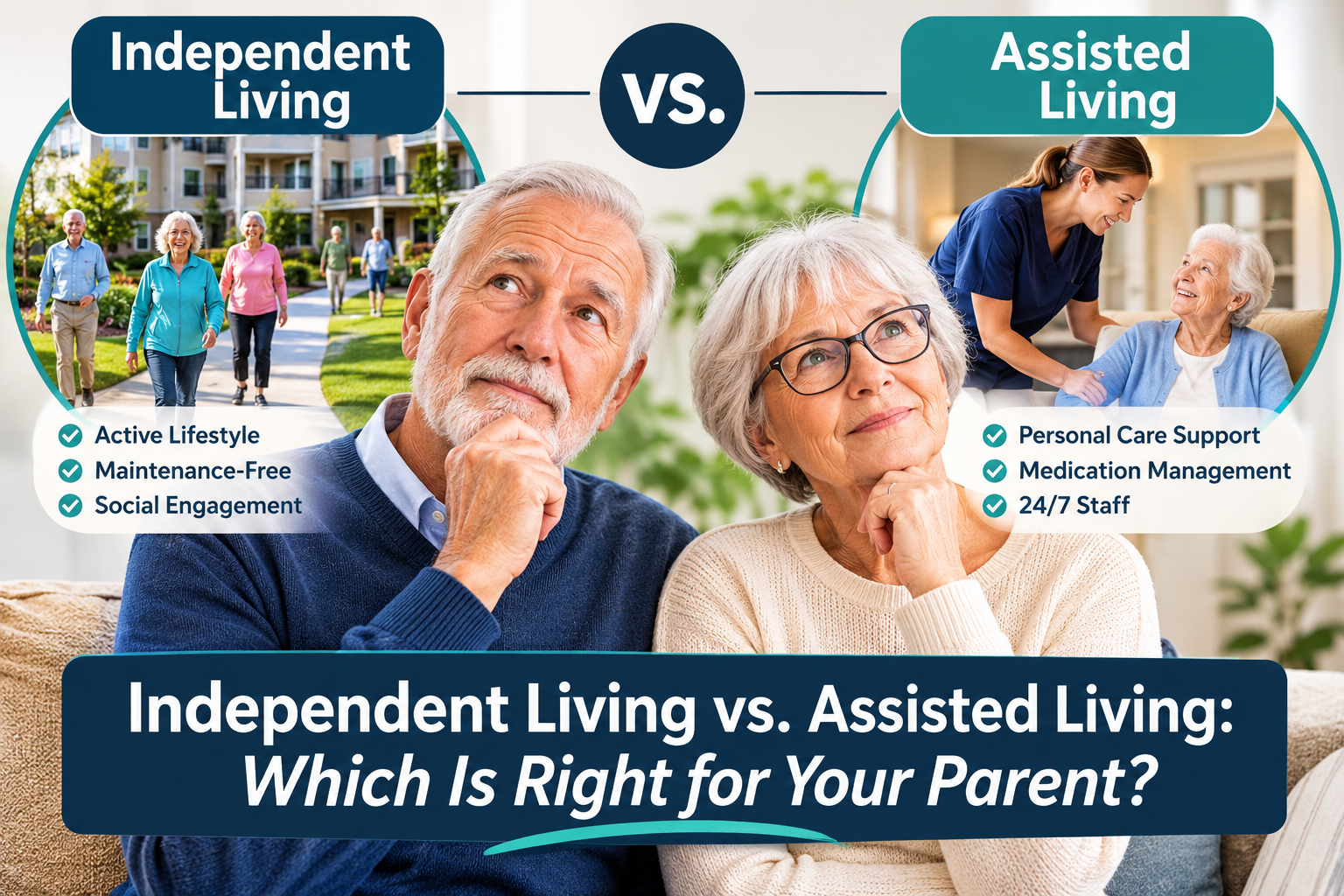
Recognizing that an aging parent needs a change in living arrangements is one of the most emotional moments a family can experience. Perhaps the family home has become too large to maintain, stairs have turned into daily hazards, or routine chores like grocery shopping and medication management are falling through the cracks.
When families begin researching senior living, two foundational options emerge: independent living and assisted living.
While these terms are sometimes used interchangeably in casual conversation, they cater to fundamentally distinct clinical needs, lifestyles, and budgets. Placing a parent in the wrong tier of care can lead to premature loss of autonomy on one hand, or unaddressed safety hazards and avoidable hospital visits on the other.
This guide provides an objective, clinically grounded comparison to help your family pinpoint the right care environment.
The Core Distinction: Lifestyle Support vs. Personal Care
The most practical way to distinguish the two environments comes down to a single question: Does your parent require hands-on physical help with daily personal tasks?
- Independent living is an active lifestyle choice centered around hospitality, socialization, and shedding the burdens of home maintenance.
- Assisted living is a care-based solution designed to provide daily physical assistance with Activities of Daily Living (ADLs) alongside maintenance-free living.
According to federal data compiled by the National Center for Assisted Living (NCAL), over half of assisted living residents require daily support with bathing and walking.
What Is Independent Living?
Independent living communities (often referred to as retirement communities, 55+ villages, or senior apartments) are built for older adults who can manage their personal hygiene, mobility, and medical routines without daily assistance.
The primary objective is not medical intervention; it is lifestyle enhancement, social connection, and convenience.
Defining Features of Independent Living
- Private Residential Housing: Fully equipped apartments, townhomes, or freestanding cottages with full kitchens, in-unit laundry, and private outdoor spaces.
- Maintenance-Free Freedom: No landscaping, roof maintenance, appliance repairs, or heavy cleaning.
- Community Amenities: Clubhouses, swimming pools, fitness centers, community gardens, movie theaters, and golf simulators.
- Social Programming: Event calendars featuring day trips, art classes, fitness instruction, book discussions, and group dinners.
- Dining Flexibility: Optional meal plans, allowing residents to cook for themselves or dine in shared, restaurant-style dining rooms.
- Medical Supervision: Generally nonexistent. Residents manage their own doctors, appointments, and prescriptions. External home health aides may be hired privately if occasional help is needed.
What Is Assisted Living?
Assisted living bridges the gap between total independence and 24-hour skilled nursing care. It serves seniors who value privacy and an active social schedule, but whose physical limitations make living entirely on their own unsafe.
Staff members are on-site 24 hours a day, 7 days a week to assist with personal care, medication timing, and emergency response.
Defining Features of Assisted Living
- Direct ADL Support: Hands-on assistance with bathing, dressing, grooming, mobility and transfers, incontinence care, and eating.
- Licensed Medication Management: Trained staff help ensure medications are administered at the correct times and dosages.
- Adapted Living Spaces: Studio or one-bedroom apartments equipped with emergency pull cords, walk-in showers with grab bars, wide doorways, and kitchenettes.
- Inclusive Meal Programs: Three balanced meals served daily in a communal dining room, with options tailored for dietary needs.
- 24/7 Security and Monitoring: Round-the-clock staffing with emergency call systems in every apartment and common area.
Side-by-Side Comparison: Independent Living vs. Assisted Living
Use this comparison to understand how the two options differ in everyday support, staffing, living arrangements, and pricing structures.
| Feature | Independent Living | Assisted Living |
|---|---|---|
| Primary Goal | Social connection and zero home upkeep | Physical safety and personal care support |
| Target Resident | Fully autonomous, active seniors | Seniors needing help with one or more ADLs |
| Personal Care | No personal care provided by the community | Daily hands-on assistance available |
| Medication Support | Self-administered by resident | Monitored and administered by staff |
| Staffing Presence | Hospitality and administrative staff | 24/7 care aides and licensed nursing oversight |
| Apartment Layout | Full kitchens and appliances | Kitchenettes with safety-adapted features |
| Average Pricing Structure | Flat monthly rent plus optional amenities | Base rent plus tiered care levels |
| Cost Range (National Average) | $2,500–$4,500/month | $4,500–$6,500+/month |
4 Scenarios: Which Environment Matches Your Parent?
Choose Independent Living If:
- Mobility and hygiene are uncompromised: Your parent showers, dresses, and navigates their living space securely without physical help or high fall risk.
- Medication routines are reliable: Prescriptions are taken consistently and accurately without confusion or skipped doses.
- The main challenge is isolation or upkeep: They feel lonely at home, no longer drive, or struggle to keep up with yard work, cleaning, and cooking.
- They seek a peer network: They want an active social calendar with group outings, fitness clubs, and shared hobbies.
Choose Assisted Living If:
- Hygiene or nutrition is declining: You notice skipped showers, disheveled clothing, weight loss, or an empty refrigerator filled with expired food.
- Mobility is unsteady: They have experienced falls, near-misses, or have difficulty transferring safely from beds and chairs.
- Prescriptions are falling out of rhythm: Pill organizers are neglected, refills are forgotten, or managing complex medication schedules causes confusion.
- Chronic conditions require monitoring: Managing diabetes, heart failure, arthritis, or early mild cognitive changes requires regular oversight.
A Helpful Question to Ask
Look beyond whether your parent wants a more social or convenient lifestyle. Consider whether they can safely manage daily personal tasks, mobility, and medication routines without hands-on help. A professional assessment can help clarify the level of support that may be appropriate.
Navigating the Cost Differences
Understanding the fee structures of each model prevents unexpected expenses.
Independent Living Costs
Independent living operates largely like conventional leasing. Residents pay a predictable monthly rent covering housing, utilities, maintenance, security, and access to campus amenities. Meals and scheduled housekeeping may be bundled into the base rate or offered through tiered lifestyle packages.
Assisted Living Costs
Assisted living pricing usually consists of two distinct components:
- Base Monthly Fee: Covers the apartment, basic housekeeping, maintenance, and three daily meals.
- Level of Care Fee: Calculated using an assessment of how much staff assistance your parent requires.
What About Continuing Care Retirement Communities (CCRCs)?
If your parent is currently independent but you worry their health may shift in the coming years, consider a Continuing Care Retirement Community (CCRC) or multi-level campus.
These communities integrate independent living, assisted living, and skilled nursing on a single campus. A resident enters an independent apartment and may transition into assisted care or memory support as physical needs evolve, potentially avoiding a move to an unfamiliar neighborhood.
How Trua Guides Your Decision (100% Free of Charge)
Sorting through marketing materials and visiting dozens of communities can quickly lead to decision fatigue. A campus that looks modern and appealing on the outside may have care-to-resident ratios, hidden level-of-care surcharges, or slow response times.
Trua Senior Living Locators removes the uncertainty:
- Geriatric Clinical Leadership: Founded by Dr. Matt Staley, a Doctor of Physical Therapy and Geriatric Certified Specialist with over 20 years of clinical experience in senior living settings.
- Objective Functional Needs Assessment: We conduct a comprehensive senior care assessment to evaluate your parent’s physical capabilities, fall vulnerability, and budget constraints.
- Pre-Vetted Local Options: We present a focused selection of 2 to 3 communities based on care needs, quality, regulatory compliance, and staffing considerations.
- Tour Accompaniment: We join you on facility walkthroughs to ask important questions about care, services, and costs.
- Completely Free to Families: Our advisory, clinical assessment, and placement services are free to seniors and their loved ones.
Help Your Parent Take the Next Step Safely
Choosing the right senior living arrangement should bring your family peace of mind, not stress. Whether you are planning ahead or facing a quick discharge decision, our local advisors are ready to walk beside you.